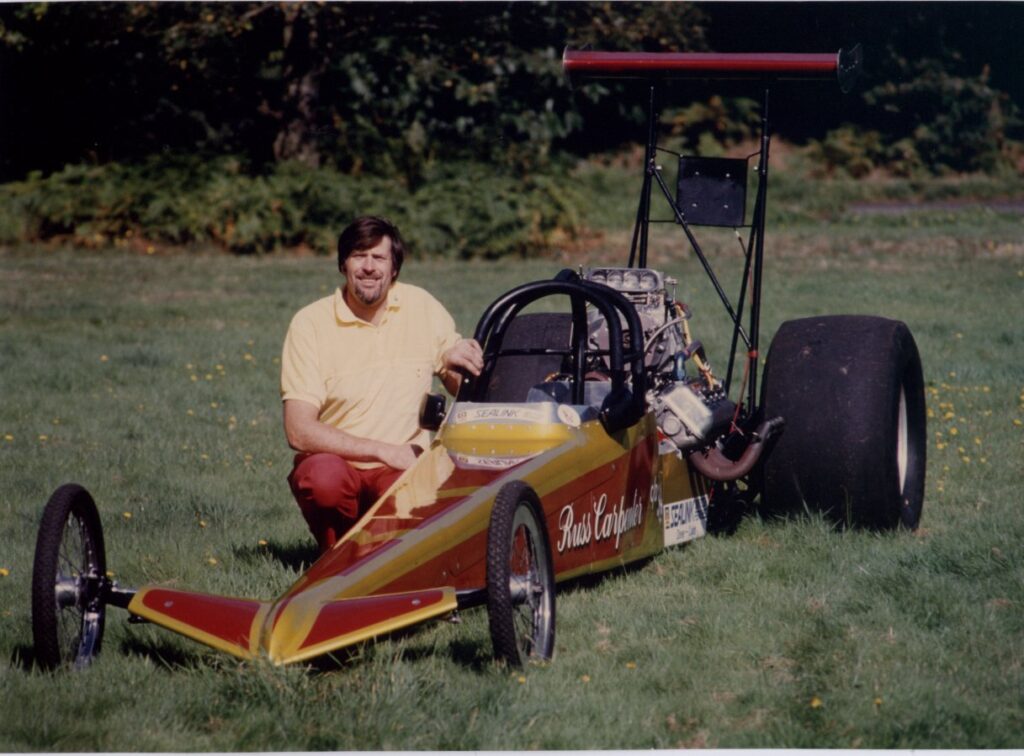
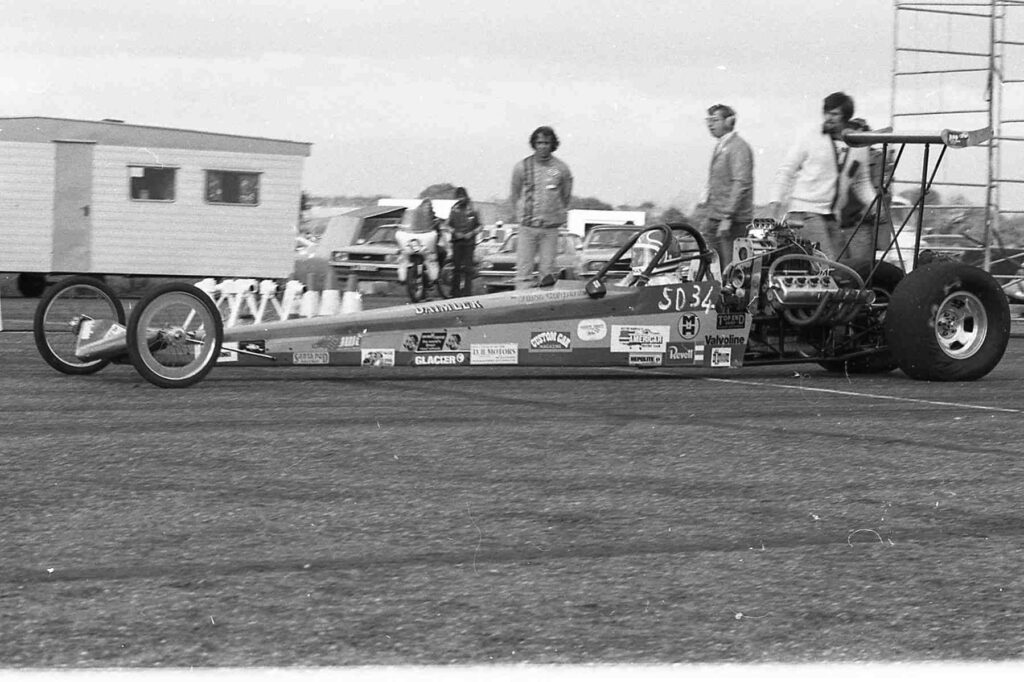
Russ began his involvement in drag racing while working for a company that fabricated and manufactured diesel pile drivers. His first hands-on racing experience came in 1969, assisting Tony Anderson with a Ford V6–powered dragster aptly named Trouble. It was, however, the Daimler Hemi engine that truly showcased Russ’s mechanical ingenuity. The Daimler was the only British-built V8 Hemi, and Russ was keen to explore its potential for drag racing.
After calculating that the engine could produce around 400 horsepower—far above its standard 140 hp output—Russ contacted British Leyland to discuss its suitability. Leyland replied that they had already tuned the engine and found it became unreliable beyond 200 hp, concluding it was impractical for racing. Undeterred, Russ consulted a friend at Shell who tested the metallurgy and confirmed that the major components were manufactured from high-quality materials. Armed with this information, Russ and Tony committed to the Daimler engine, which would ultimately produce well in excess of 1,000 hp.
As development progressed, the team constructed one of the first rear-engined dragster chassis in the UK. The car debuted in March 1972 under the name More Trouble. Building a British-engined dragster meant fabricating or adapting many components, as off-the-shelf parts simply did not exist. Russ spent evenings in a friend’s machine shop and sourced aluminium from another contact to manufacture bespoke parts. The entire fuel system was built this way, crowned with an adapted hood scoop based on designs commonly used on Top Fuel dragsters but modified specifically for the Daimler engine.
Space constraints required Russ to fabricate a custom slider clutch, as a full-size unit would not fit and no suitable alternative was available commercially. By carefully studying Top Fuel dragster components, he re-engineered a smaller version for his own car. A few years later, he adapted a racing B&J transmission, manufacturing replacement parts himself due to the lack of spares and upgrading the hydraulics to achieve faster activation.
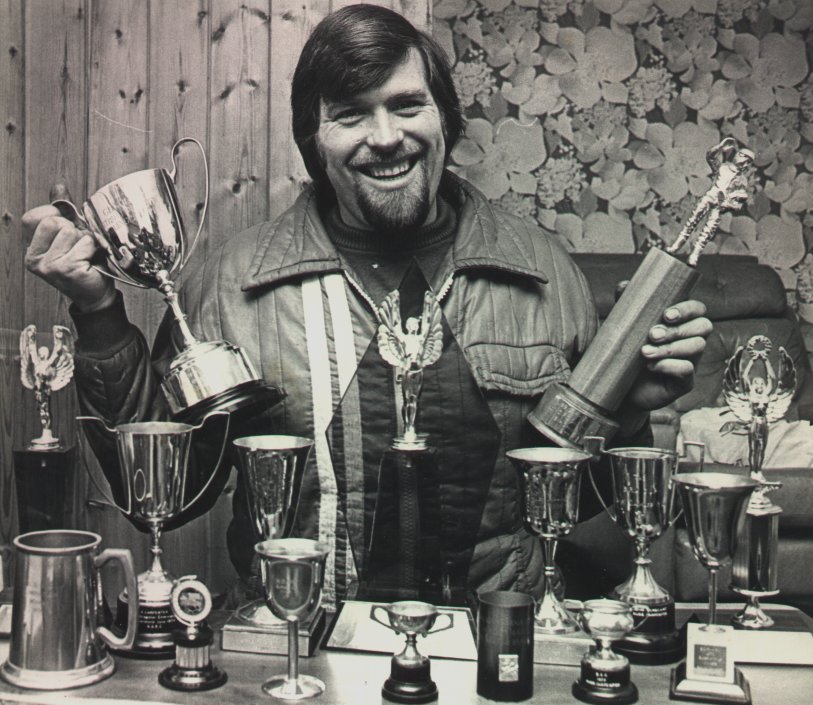
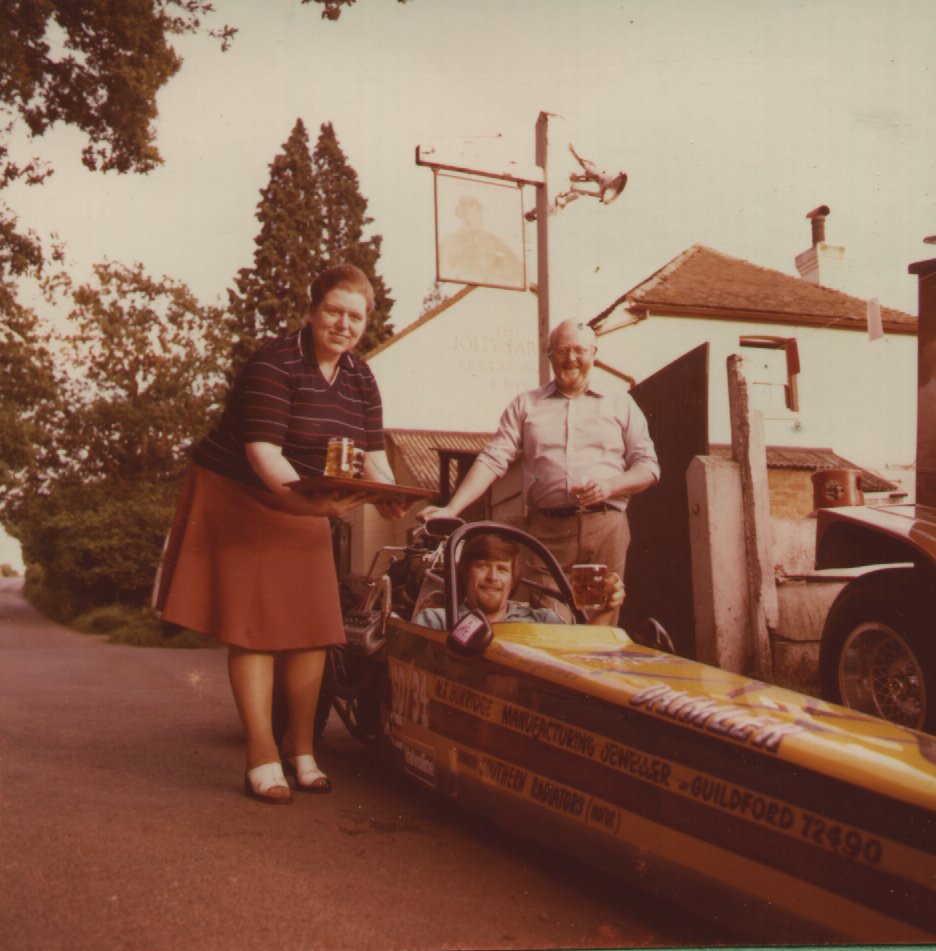
Russ took over driving duties in 1975 and went on to win numerous championships and events in the Senior Dragster category. In 1979, through friends, he was introduced to AE Autoparts (Hepolite Glacier), after which the car was renamed the Glacier Grenade. Remarkably, Russ continued to use largely stock engine components—including Triumph TR6 pistons—even as nitromethane percentages increased.
With AE Autoparts’ support, Russ achieved a historic milestone in July 1980. Driving the Glacier Grenade, he broke two world records, becoming the first British-engined car—and the first car anywhere in the world under five litres—to complete a quarter-mile in under eight seconds. The car eventually recorded a best of 7.2 seconds at 180 mph.
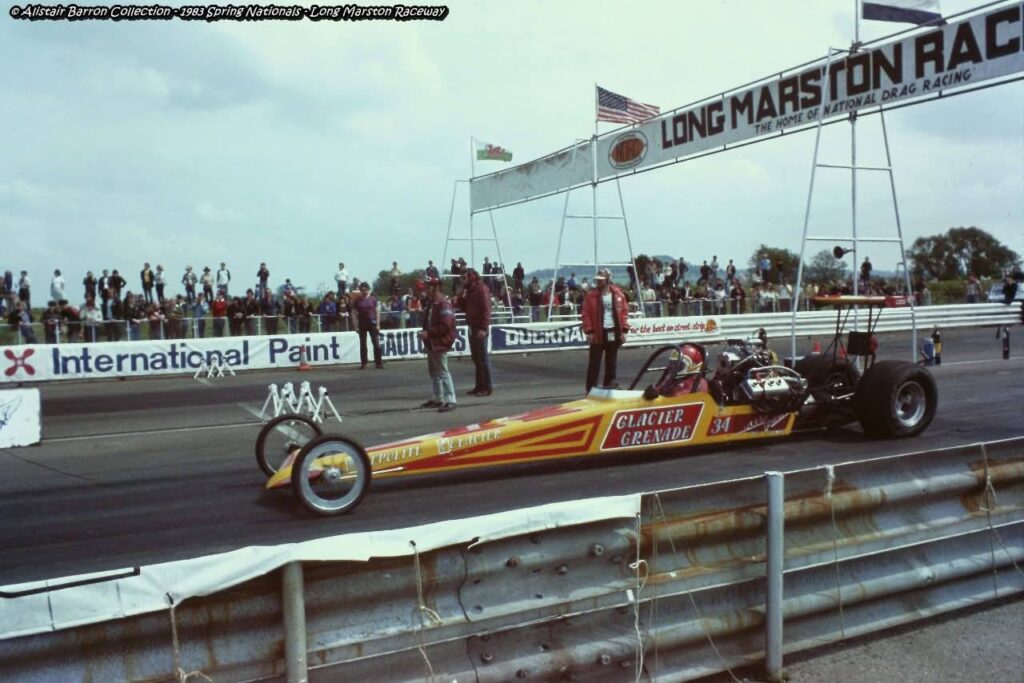
Such dominance led to complaints from competitors, who argued that the rules unfairly favoured Russ and called for weight penalties. When rule changes were introduced, Russ responded by fitting a heavier but stronger and more efficient Ford nine-inch rear axle. The modification made the car even quicker, prompting rivals to request that the weight changes be reversed.
Russ also campaigned the dragster across Europe. At Mantorp Park in Sweden, competitors protested—much to the organisers’ frustration—that Russ had been placed in the wrong class because his entry weight failed to include his own not-insubstantial body weight. Reclassified into a less favourable category, Russ nevertheless defeated all Swedish competitors, losing only narrowly in the final to John Whitmore, who was running in the lower class.
At Le Mans in 1983, Russ faced further protests, this time from Swedish Top Fuel racers when he was placed in their class to bolster numbers. Dennis Priddle bluntly pointed out that the protests stemmed from the fact that they could not match Russ’s times.
During the 1980s, Russ won the Euro Series Championship twice and maintained a fierce rivalry with Robin Read, whose Daimler V8-powered dragster was one of the few genuine challengers. That rivalry came to an end in 1989 when small nitro-fuelled cars were outlawed in the Euro Series. Russ retained the Glacier Grenade and has exhibited it regularly for more than twenty years, cementing its place as one of the most significant British drag racing cars ever built.